dantepic.png

The project CODEVELOP-AG-SH-HE/0823/00164 was funded by the Research and Innovation Foundation , under the “RESTART 2016 - 2020” Programme and through the European Union Recovery and Resilience Facility (RRF) of the NextGenerationEU instrument. The project has a duration of two years, running from April 2024 onwards.

Project Summary

The recent SARS-CoV-2 outbreak has increased the demand for textiles with embedded antimicrobial and antiviral properties, with applications spanning from air filters and food packaging to sportswear and water purification. However, challenges like limited versatility and durability, environmental concerns, and high production costs hinder their widespread use. Most antimicrobial textiles/veils use synthetic chemicals, which may not be versatile, durable, or environmentally friendly. Electrospun nanofabrics are emerging as a solution, given their cost-effectiveness, adaptability, and multifunctional properties. Accordingly, DANTE aims to create innovative, bio-compatible, non-woven nanofabrics ideal for protective clothing and cosmetics, leveraging the antimicrobial potential of nanofiber networks and their ability to encompass nanoentities that offer multifunctionality and customizability. DANTE’s general objectives are:

GO I. Establish a long-term partnership between industrial and academic partners that goes beyond the current project. This collaboration will combine access to bespoke equipment and processes (e.g. spark and arc ablation, needless electrospinning), highly specialized personnel, academic and industrial competencies, and expertise. The goal is to accelerate the development and commercialization of technologies and products, currently in R&D stage, for the medical and cosmetics industries.

GO II: Leverage upon partners’ expertise on antimicrobial/viral nanoparticles and polymer nanofiber development to create hybrid nanofabrics with broad spectrum antimicrobial efficiency. Combine antifungal, antiviral, and antibacterial properties with optimal nanofabric morphological characteristics, bio- compatibility, and biodegradability in a novel product (textile) with particle filtering and pathogen elimination capabilities, increased breathability for comfort, tailored to medical and cosmetics applications.

GO III: Use novel, certified methodologies (i.e. Generally Recognized as Safe - GRAS) to assess antimicrobial properties of nanoparticle-enhanced nanofabrics to accelerate screening and assessment processes for adopting the technology in medical and cosmetics industries. Investigate the methods for producing DANTE textiles at large scale and implement the necessary quality control measures and standards to reach product and processing development at TRL 7 by the end of the project.

DANTE will focus on the following processes to develop antimicrobial textiles for medical and cosmetics industries. These are: (i) nanoparticle fabrication and production, (ii) polymer nanofiber production, (iii) nanofiber enhancement with NPs, (iv) development of the integration process of antimicrobial nanofabrics into cloths, and (v) development of the integration process of antimicrobial nanofabrics into cosmetic facial masks and skin cleansing/anti-pollution products. Process (i) has been developed by CYI and is currently available with increased production rates presenting a high TRL; process (ii) is common in the industry with an increased TRL as well, and it will be optimized for the needs of the project; processes (iii), (iv) have been developed at AmaDema and validated in the lab as well as in a relevant environment; regarding process (v), Sentinel has developed certain processes that will assist integration of antimicrobial-biobased nanofabrics in cosmetic products, currently the process has been demonstrated in relevant environment.

Toward the development of novel antimicrobial textiles, AmaDema collaborates with:

1) The University of Nicosia Research Foundation (UNRF) and specifically with the Pharmacy Program to set the requirements for antimicrobial/antiviral/antibiofilm/antifungal textiles (compounds, natural extracts, encapsulation techniques, etc.) to be used in protective clothing and bio-based antimicrobial textiles for cosmetics, but also to support the efficiency of developed textiles via CFD simulations.

2) The Cyprus Institute (CYI) and specifically the Instrumentation and Nanotechnology Laboratory (INL), to produce appropriate NPs in terms of purity, elemental mixing, size, and quantity will be utilized to address the antimicrobial requirements set by UNRF within the nanofiber-enhanced textiles to be developed for both protective clothing and cosmetic applications.

3) Sentinel Skin Cosmetics (Sentinel), a new company that has commercialized materials for cosmetics in Cyprus and abroad. Sentinel has a specific interest in the bio-based antimicrobial nanofabrics developed by AmaDema and will significantly contribute to the validation and demonstration of such textiles in operational environment in terms of production, testing, and certification.

4) The Cyprus University of Technology (CUT), to assure that the required testing procedures will be applied for the demonstration and validation of the antimicrobial textiles for protective clothing in operational environment in terms of production, testing, and certification.

dante_partners.png

Project News

2024

April: Project Launch

April: Initiation of dissemination strategy and implementation

April 11th: Kick-off meeting at AmaDema

July 16th: Online Consortium Technical Meeting #1

August: CyI presented at the EAC 2024 an oral presentation entitled “Synthesis of metal nitride nanoparticles via atmospheric-pressure spark discharge generator” at Tampere, Finland.

December 11th: Consortium Technical Meeting #2

December 19th: Consortium Technical Meeting #3

2025

January: CUT and AmaDema presented a poster entitled “Antimicrobial electrospun nanofabrics for enhanced functionality”, while CyI contributed by a poster entitled “Enhancing the Production of Spark Discharge Nanoparticle Generators” at 1st Conference of the Cyprus-Advanced Materials Network (Cy-AMN), at Nicosia, Cyprus.

May 28th: Intermediate Evaluation

June 26th: Consortium Technical Meeting #4

September: AmaDema presented at ICSAAM 2025 an oral presentation entitled “Stochastic modeling and prediction of particle size and shape evolution in mechanical alloying via ball milling” at Brasov, Romania.

December 5th: Consortium Technical Meeting #5

December 5th: Workshop organized by AmaDema #1

2026

January 30th: Consortium Technical Meeting #6

February 13th: Consortium Technical Meeting #7

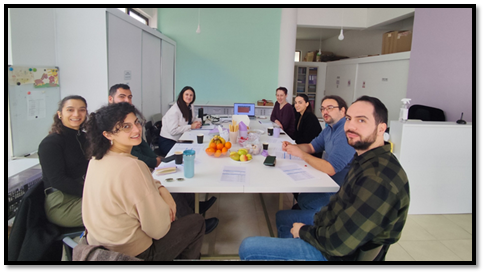
February 13th: Workshop organized by Sentinel Skin Cosmetics #1

February 13th: Workshop organized by CUT #1

March 17th: Consortium Technical Meeting #8

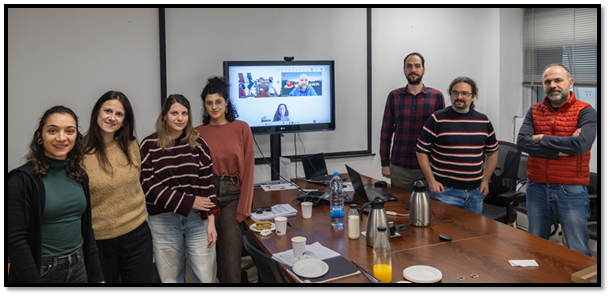
March 17th: Workshop organized by CyI #1

March 17th: Workshop organized by CUT #2

March 27th: Consortium Technical Meeting #9

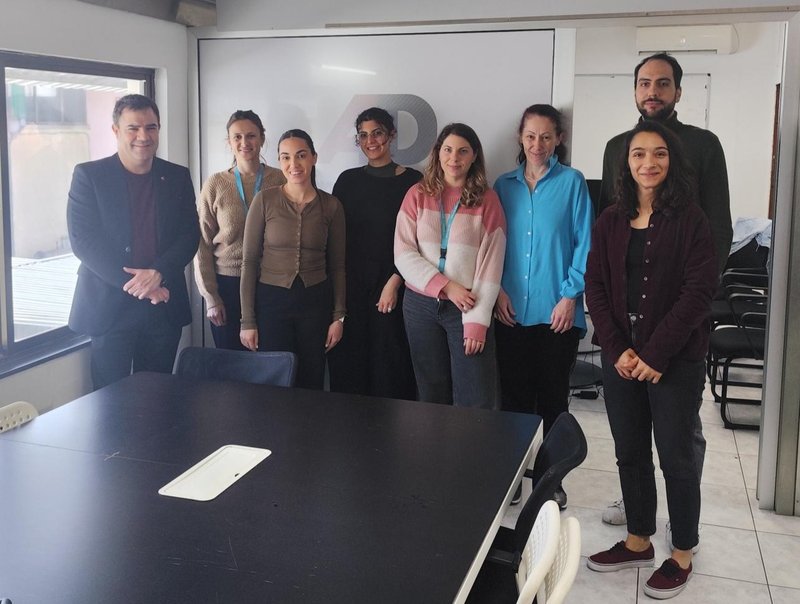
March 27th: Workshop organized by AmaDema #2

March 27th: Workshop organized by UNRF #1

May: CyI presented at the APT 2026 a poster presentation entitled “Antimicrobial activity of pristine and mixed nanoparticles produced by atmospheric-pressure spark ablation” at Corfu, Greece.
IMG_20260327_133357-2.JPG

Figure 1: Participants of the workshop organized by AmaDema.
Picture2.png

Figure 2: Participants of the workshop organized by Sentinel Skin Cosmetics.
Picture3.png

Figure 3: Participants of the workshop organized by CyI.

dantepic4.png
